Blog
Understanding Glucose vs. Fat Preference in Cells

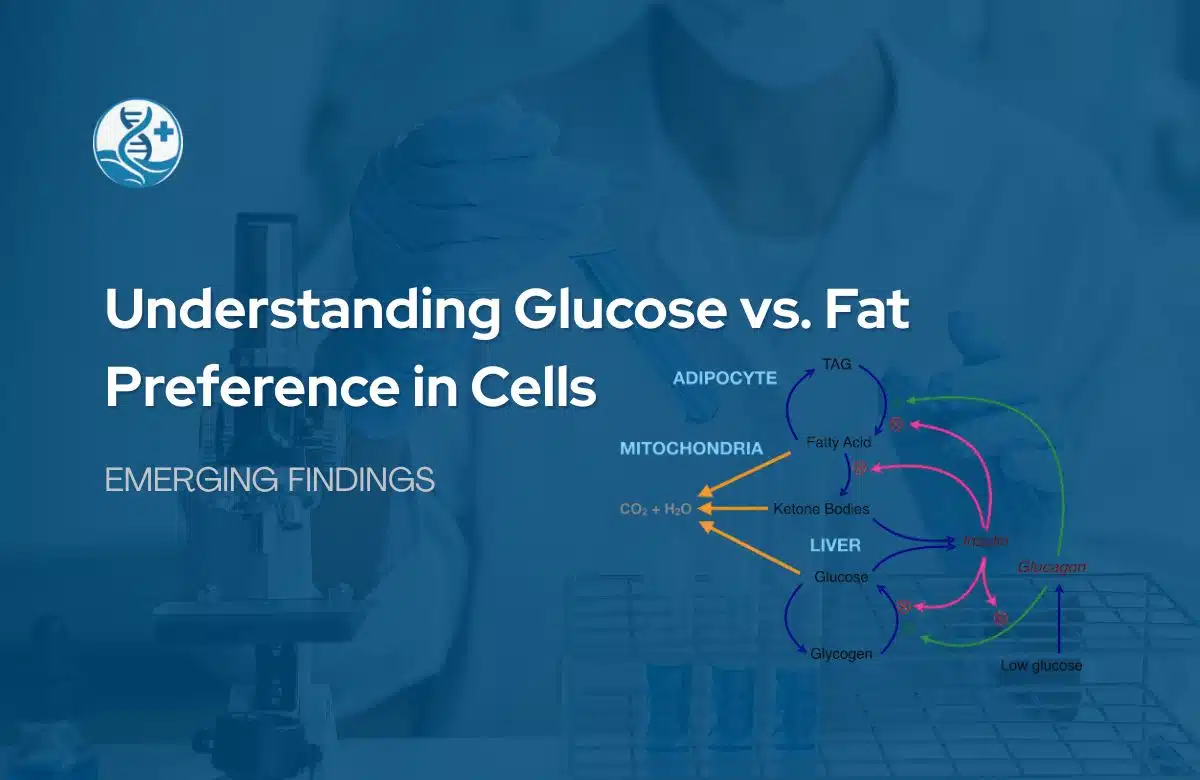
Cellular energy metabolism is one of the most fascinating and complex areas of biological research. Every cell in the body requires a constant stream of energy to perform essential functions such as division, repair, signaling, and maintaining homeostasis. Two primary fuel sources support these processes: glucose and fatty acids. Understanding why and when cells choose one over the other is essential for researchers examining metabolism, mitochondrial efficiency, cellular stress responses, and biochemical pathways.
This article explores the scientific mechanisms behind cellular fuel selection, the metabolic pathways involved, and how cells shift between glucose and fat utilization based solely on available evidence. This discussion is intended for research and educational purposes only.
Why Cells Need Multiple Energy Sources
Cells operate in dynamic environments. Nutrient availability, energy demand, oxygen levels, hormonal signals, and intracellular stress all influence how cells metabolize fuel.
Glucose is often viewed as the body’s primary energy source because it is quickly metabolized. Fatty acids, however, provide a more energy-dense fuel. Both exist in a coordinated system where cells can switch between them to maintain ATP production under varying conditions.
The flexibility to use either fuel source — known as metabolic flexibility — is a key concept in research exploring cellular performance, mitochondrial function, and metabolic disorders.
How Glucose Is Metabolized: Glycolysis and Beyond
When glucose enters a cell, it is metabolized through a pathway known as glycolysis. This process occurs in the cytosol and generates pyruvate, ATP, and NADH.
If oxygen availability is adequate, pyruvate is transported into the mitochondria to undergo oxidative phosphorylation via the tricarboxylic acid (TCA) cycle and the electron transport chain (ETC). This is an efficient ATP-producing process that supports many high-demand cellular activities.
In low-oxygen conditions, cells may convert pyruvate into lactate to regenerate NAD+, allowing glycolysis to continue. This is known as anaerobic metabolism, commonly seen in cells experiencing rapid energy needs or limited oxygen availability.
Research shows that cells often prioritize glucose when:
-
Rapid ATP is required
-
Oxygen levels fluctuate
-
The cell is in a growth or replication phase
-
Certain signaling pathways, such as insulin-mediated processes, are activated
Because glycolysis can proceed with or without oxygen, it provides a versatile energy option in variable environments.
How Fat Metabolism Works: Beta-Oxidation and Mitochondrial Processing
Fatty acids generate energy primarily through beta-oxidation, a mitochondrial-dependent process that breaks long-chain fatty acids into acetyl-CoA molecules. These feed into the TCA cycle and ultimately produce ATP through oxidative phosphorylation.
Fat metabolism is highly efficient, generating significantly more ATP per molecule compared to glucose. However, it requires:
-
Sufficient oxygen
-
Functional mitochondria
-
More time to initiate the metabolic process
Cells tend to rely on fatty acids when long-term, steady energy production is needed — particularly in tissues with a high mitochondrial density.
Research indicates that fatty acid oxidation plays a major role when:
-
Energy demand is continuous rather than rapid
-
Oxygen is abundant
-
Glucose availability is lower
-
Specific transcription factors such as PPAR-α are activated
In research models, fat oxidation is closely tied to mitochondrial efficiency and resilience, making it an important area of study for cellular health and metabolic regulation.
What Determines a Cell’s Fuel Preference?
The preference between glucose and fat is not fixed. Instead, cells continuously evaluate internal and external conditions to determine the most efficient fuel source.
1. Oxygen Availability
Glucose metabolism can adapt to low-oxygen environments, while fat metabolism cannot. When oxygen is limited, cells typically shift toward glycolysis.
2. Hormonal Signals
Hormones such as insulin and glucagon influence substrate availability. Insulin promotes glucose uptake, while low insulin levels allow fatty acids to become the dominant fuel source.
3. Energy Demands and Stress States
High-intensity, rapid energy requirements favor glycolysis. Prolonged energy needs favor fat oxidation.
4. Mitochondrial Function
Beta-oxidation depends entirely on mitochondrial efficiency. Impaired mitochondria often reduce fatty acid utilization and redirect metabolism toward glycolysis.
5. Nutrient Availability
Cells naturally adjust fuel preference based on what is accessible in the environment. This adaptive behavior is central to metabolic homeostasis.
The Role of Metabolic Flexibility
Metabolic flexibility describes the ability of cells to switch seamlessly between glucose and fatty acids. This adaptability is critical for resilience under shifting metabolic conditions.
When metabolic flexibility is impaired, research often reports:
-
Elevated cellular stress
-
Reduced mitochondrial performance
-
Disrupted ATP production
-
Accumulation of metabolic intermediates
Scientific interest in metabolic flexibility continues to grow, especially in areas examining mitochondrial bioenergetics, cellular aging pathways, and responses to fluctuating nutrient environments.
How Mitochondria Influence Fuel Preference
Mitochondria are essential for processing fatty acids, making them the primary regulators of long-term energy production. These organelles coordinate oxidative phosphorylation and ATP output through intricate enzyme systems and electron carriers.
Several mitochondrial-related factors influence fuel selection:
-
Enzyme activity levels in the TCA cycle
-
The functional capacity of the ETC
-
Reactive oxygen species production
-
Cellular redox state
-
Mitochondrial biogenesis
Research continues to explore how mitochondrial adaptations — including fission, fusion, membrane dynamics, and protein expression — impact whether the cell favors glucose or fat.
AMPK and Fuel Selection: The Energy Sensor
One of the most widely studied regulators of cellular metabolism is AMP-activated protein kinase (AMPK). This enzyme acts as a sensor that detects changes in cellular energy status.
When energy is low, AMPK activation can:
-
Increase glucose uptake
-
Enhance fatty acid oxidation
-
Reduce energy-intensive biosynthetic processes
Its ability to coordinate multiple pathways makes AMPK a central figure in research examining metabolic flexibility and cellular stress responses.
Why Research Continues to Explore Glucose-Fat Dynamics
Understanding how cells choose between glucose and fat fuels numerous scientific fields, including:
-
Cellular metabolism
-
Mitochondrial biology
-
Bioenergetics
-
Stress and repair pathways
-
Aging and metabolic modeling
This knowledge helps researchers create better experimental frameworks when studying energy regulation, mitochondrial stress, enzymatic efficiency, and the biochemical consequences of metabolic shifts.
As research advances, new pathways and regulatory mechanisms continue to emerge, deepening our understanding of cellular energy management.
The preference between glucose and fat in cellular metabolism is not a simple choice but a dynamic system regulated by oxygen availability, signaling pathways, mitochondrial function, and environmental conditions. Both fuel sources serve essential roles and support different metabolic demands. Research examining these mechanisms highlights the importance of metabolic flexibility and the intricate balance cells maintain to optimize ATP production.
A deeper understanding of these processes continues to shape modern research in bioenergetics, metabolic adaptation, and cellular resilience. By exploring the scientific foundations of glucose and fat utilization, researchers can better interpret experimental outcomes and design future studies with enhanced precision.