Why buy BPC-157 from River Peptides?
River Peptides is a trusted BPC-157 UK supplier because every new batch is independently tested by accredited third-party laboratories, including Janoshik and Analiza Biatek, using advanced methods such as HPLC and mass spectrometry to verify purity, identity and overall quality. Results are reviewed and published promptly so research always receives transparent, up-to-date data which reflects the exact batch in circulation, ensuring consistent, reliable, research-grade compounds.
BPC-157 UK supplier selling online for research purposes.
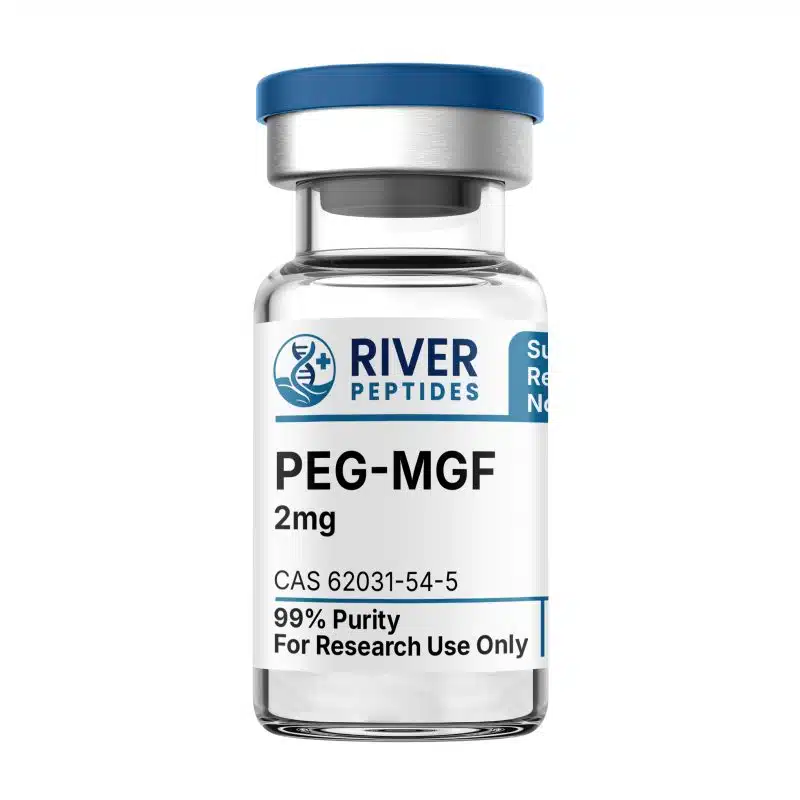
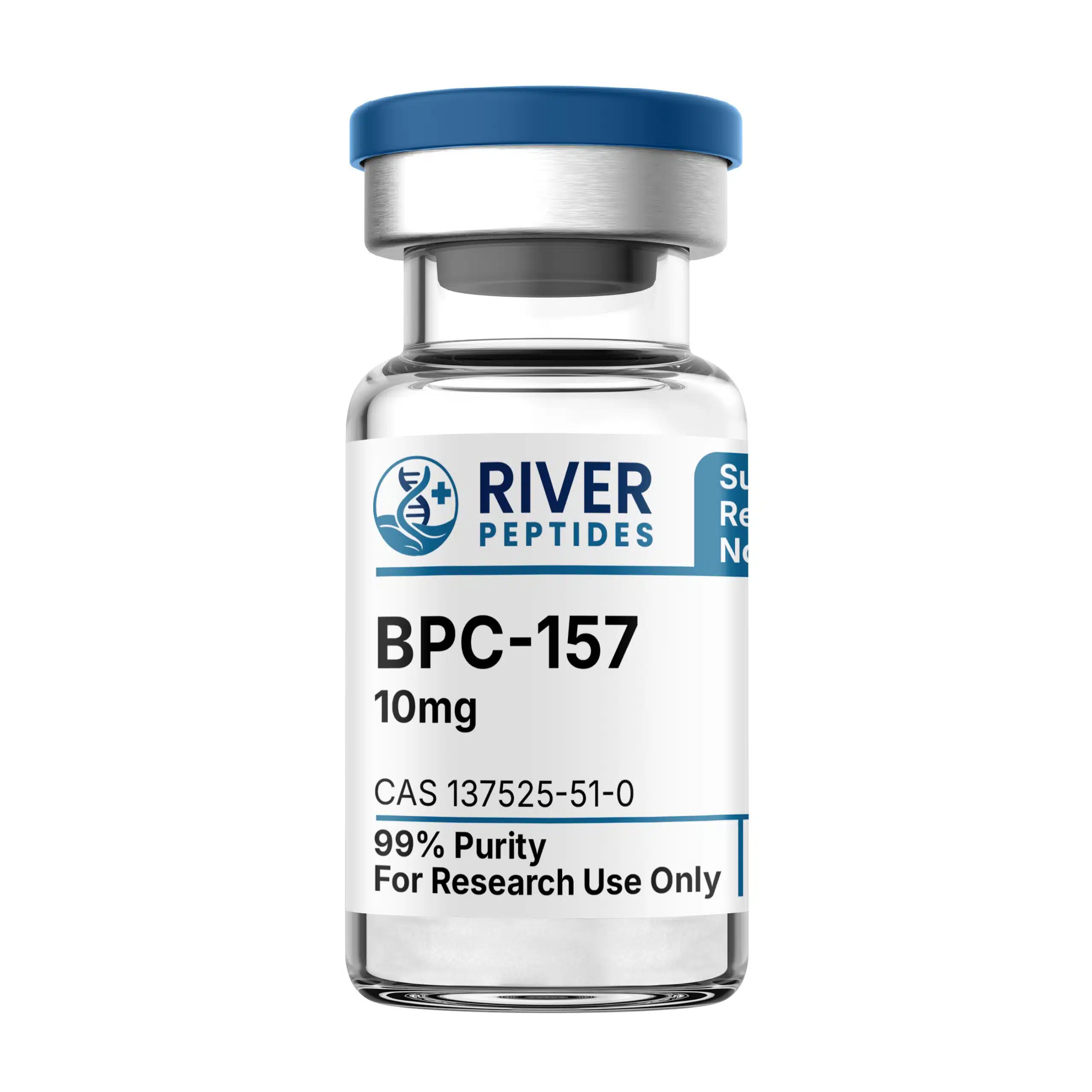
BPC-157 (10mg) — Research Compound
BPC-157 (Body Protection Compound 157) is a pentadecapeptide derived from a protective protein found in human gastric juice. It is studied for its wide-ranging cytoprotective effects, particularly within the gastrointestinal tract and the musculoskeletal system. Research focuses on its ability to modulate the nitric oxide (NO) pathway and interact with growth factor expression to accelerate the healing of diverse tissues, including bone, muscle, and tendons.
What does the clinical data on BPC-157 show?
Published BPC-157 evidence is predominantly preclinical, but data so far demonstrate:
- Marked acceleration in the healing of transected tendons and ligaments observed in experimental models
- Protective effects on the gastric mucosa and the reversal of NSAID-induced damage reported in-vitro
- Enhanced rates of angiogenesis and increased expression of vascular endothelial growth factor (VEGF) noted
- Observed improvements in the recovery of the “brain-gut” axis following systemic stress reported in-vivo
Researchers study BPC-157 to investigate its potential as a broad-spectrum regenerative agent. Its ability to remain stable in gastric juice makes it a unique model for studying localized versus systemic peptide activity. This compound is a primary focus for research into inflammatory bowel disease, complex soft tissue repair, and the biological mechanisms of organoprotection.
Available Formats of BPC-157
This compound is available as a vial of lyophilised powder, or can be ordered in a disposable pen, a reusable pen, or a cartridge for an existing reusable pen system.
BPC-157 Peptide Research Limitations:
- Used in clinical trials involving humans
- Administered to humans as part of an experiment or investigation
- Supplied to another party for human investigational use
References
Stable Gastric Pentadecapeptide BPC 157 and Wound Healing Mechanisms
This review discusses BPC-157 and its involvement in angiogenesis, tissue repair, and cytoprotective signalling pathways.
Source Link: Available here
BPC 157 and Vascular Recruitment in Tissue Repair Research
This publication examined BPC-157 and reported effects on blood vessel recruitment and healing-related cellular pathways.
Source Link: Available here
The Cytoprotective Profile of BPC 157
This review summarises evidence surrounding BPC-157 and its role in gastrointestinal, musculoskeletal, and vascular research models.
Source Link: Available here
Certificate of Analysis (COA): Available here
BPC-157 FAQs
What is BPC-157?
BPC (Body protective compound) 157 is a synthetic pentadecapeptide widely used in experimental research to study cellular protection and tissue repair mechanisms.
How does BPC-157 work?
BPC-157 peptide research in preclinical trials has demonstrated that it may interact with nitric oxide, angiogenic and growth factor pathways. This may influence fibroblast migration and generate tendon-healing signals. However, these findings have yet to be investigated in human beings in a clinical study.
How to store BPC-157?
In a laboratory environment, BPC-157 is usually kept at -20 °C to maintain stability over long periods. Once a vial has been opened, researchers avoid repeated freeze-thaw cycles to protect peptide integrity. Under these conditions, unopened material is generally stable for extended storage durations. When reconstituted under sterile conditions, the peptide is usually kept between 2–8 °C in aqueous solution for up to 28 days.
Where does BPC-157 originate from?
Although BPC-157 is a synthetic peptide, it is modelled after a naturally occurring protein fragment found in gastric juice.
How is the purity of BPC-157 verified?
All of our batches are independently tested by our third-party laboratory using High Performance Liquid Chromatography (HPLC) and mass spectrometry. Our peptides consistently achieve over 99% purity. View our full certificates of analysis for every product and read more about our independent testing.
How to reconstitute BPC-157?
Our BPC-157 10mg lyophilised powder should be reconstituted with bacteriostatic water. This should be slowly added down the inner wall of the vial, then gently swirling.
How much BAC water for BPC-157 10mg
In laboratory environments, BPC-157 10mg is reconstituted with a measured volume of sterile diluent appropriate for in vitro experimentation. Researchers typically use volumes between 1mL to 5mL with 2mL being the recommended amount for assay preparation. This information applies solely to controlled research workflows.
What is the use of BPC-157 injection?
The BPC-157 injection is used in preclinical research. The data demonstrated that BPC 157 may have cytoprotective, neuroprotective and anti-inflammatory effects. BPC 157 Peptide Research has also demonstrated it may accelerate tissue and organ healing, however more research needs to be done to understand its impacts on humans.
Is BPC-157 a steroid or peptide?
BPC 157 peptide is a therapeutic peptide currently under pre-clinical investigation for its benefits, uses, and side effects.
| Weight | 10 kg |
|---|
| IDENTIFICATION | |
| Product Name | BPC-157 10 mg |
| Catalogue Number | RP-BPC157-01 |
| CAS Number | 137525-51-0 |
| Molecular Weight (g/mol) | 1419.6 g/mol |
| Molecular Formula | C62H98N16O22 |
| Peptide Sequence | H-Gly-Glu-Pro-Pro-Pro-Gly-Lys-Pro-Ala-Asp-Asp-Ala-Gly-Leu-Val-OH |
| PHYSICAL AND CHEMICAL PROPERTIES | |
| Active Ingredient | BPC-157 |
| Appearance | White to off-white lyophilised powder |
| Melting Point | Not applicable (decomposes before melting) |
| ANALYTICAL AND QUALITY CONTROL | |
| Mass Spectrum | Conforms to specification |
| Structural Confirmation | Consistent with theoretical structure / sequence |
| RESEARCH USE AND SAFETY | |
| Caution | Handle using appropriate PPE and in compliance with relevant laboratory safety standards. |
| Intended Use | For laboratory research use only. Not for human or veterinary use. |
| Hazard Classification | Not classified as hazardous under GHS for research quantities |
| STORAGE, HANDLING AND STABILITY | |
| Storage Temperature, Opened | -20 °C, minimise freeze–thaw cycles |
| Storage Temperature, Unopened | -20 °C recommended for long-term storage |
| Shelf Life | 2 years unopened under recommended conditions |
| Reconstitution Stability | Stable for up to 28 days at 2–8 °C in aqueous solution under sterile conditions |
Certificate of Analysis – BPC-157 (99% Purity Verified)
| COMPOUND IDENTIFICATION | |
| Product Name | BPC-157 (10mg) |
| Batch / Reference ID | BP100516 |
| Sample Form | White powder in a glass vial |
| ANALYTICAL RESULTS | |
| Chemical Purity | 99% (Verified) |
| Measured Content | 10.44mg (± 0.05mg) |
| Test Method | HPLC (High-Performance Liquid Chromatography) |
| LABORATORY TESTING INFORMATION | |
| Analysis Period | 12 Jun 2026 – 15 Jun 2026 |
| Laboratory Order # | 100015091 |
| QUALITY ASSURANCE | |
| Quality Testing Standards | All River Peptides products undergo batch-level laboratory analysis to verify compound identity and confirm purity levels. Learn more on our Quality Testing & Purity Verification page. |