Buy Hormonal Peptides
Researchers looking to buy hormonal axis peptides in UK laboratories often explore investigational compounds related to hypothalamic-pituitary-gonadal signalling, reproductive hormone regulation, and endocrine feedback mechanisms. Peptides in this category are studied for their interaction with hormone-signalling pathways in preclinical models.
River Peptides supplies hormonal axis research peptides for laboratory research, and tests every batch independently before it goes on sale. Each batch is verified at 99%+ purity, backed by ISO 9001 (quality management) and ISO 14001 (environmental management) accreditation.
CJC-1295 + Ipamorelin
CJC-1295 without DAC
Understanding hormonal axis peptides
Peptide hormones are short chains of amino acids that act as chemical messengers, regulating processes such as growth, metabolism, and reproduction by binding to receptors on target cells (ScienceDirect: Peptide Hormone). Researchers turn to this category when they need a peptide studied within a specific hormonal pathway rather than a generic “hormone peptide,” with each batch verified before it’s listed for sale.
Peptides by endocrine pathway
The products in this category fall into three groups, based on the pathway each is studied in relation to.
Reproductive (HPG) axis
Kisspeptin-10 is a fragment of the kisspeptin peptide, which sits upstream of gonadotropin-releasing hormone (GnRH) in the hypothalamic-pituitary-gonadal axis. Research shows kisspeptin stimulates GnRH-producing neurons, which in turn drives the gonadotropin release that regulates reproductive function (NCBI). It’s studied both as a signalling molecule in its own right and as a tool for investigating GnRH pulse generation.
Melanocortin system
PT-141 and MT-1 both derive from alpha-melanocyte-stimulating hormone (alpha-MSH), but act on different melanocortin receptors. PT-141 (bremelanotide) is studied for its activity at the melanocortin-4 receptor (MC4R) in the hypothalamus, a central nervous system pathway distinct from the peripheral mechanisms used by other compounds in sexual response research (PMC). MT-1 targets the melanocortin-1 receptor (MC1R) on melanocytes, the pathway studied in relation to pigmentation (NCBI). Research built around one receptor pathway shouldn’t be assumed to transfer to the other.
Circadian and neuroendocrine signalling
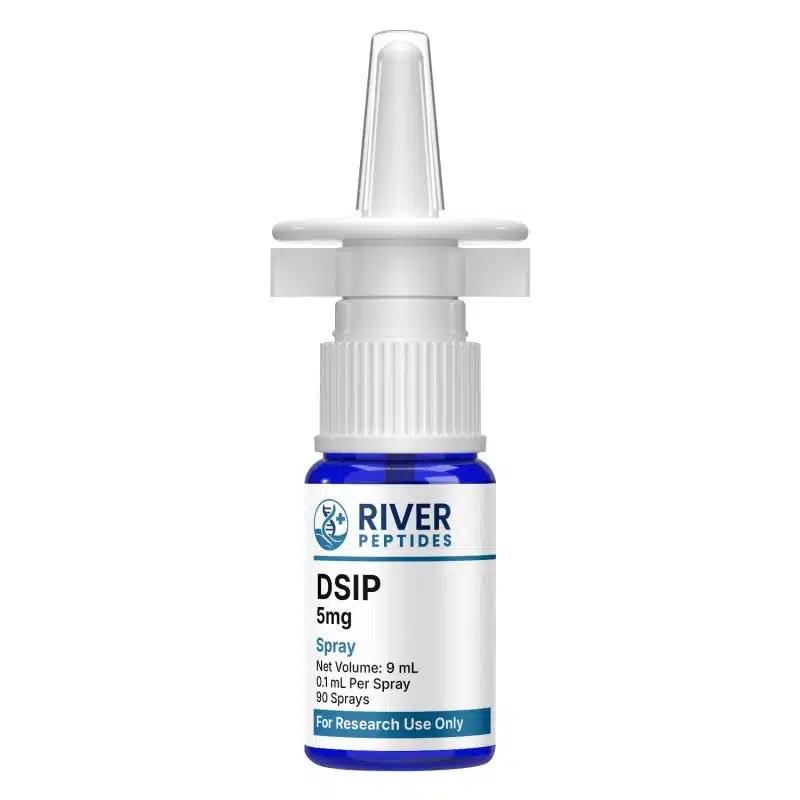
DSIP (delta sleep-inducing peptide) is studied in relation to sleep-associated neuroendocrine regulation. VIP (vasoactive intestinal peptide) is studied for its role in the suprachiasmatic nucleus, the brain’s central circadian pacemaker, where it helps synchronise the timing of individual clock neurons (NCBI). Pinealon is a synthetic bioregulator peptide studied in relation to pineal gland function, the gland responsible for melatonin secretion.
Looking for compounds studied in relation to growth hormone release? See our Growth Hormone Peptides category.
Independent testing on every batch
River Peptides sends every batch it receives for independent analysis before it’s made available for sale. Accredited third-party laboratories, including Janoshik Laboratories in the Czech Republic and Analiza Biatek in Poland, carry out the testing, using high-performance liquid chromatography (HPLC) to confirm purity and mass spectrometry to verify compound identity.
River Peptides holds ISO 9001 quality management and ISO 14001 environmental management accreditation. The batch ID printed on each product label links to that batch’s certificate of analysis. Full details on the testing process are available on our independent testing page.
Frequently Asked Questions
What is the hormonal axis peptide category?
This category groups research peptides by the hormonal signalling pathway each is studied in relation to, covering the reproductive (HPG) axis, the melanocortin system, and circadian and neuroendocrine signalling.
Are hormonal axis peptides legal to buy in the UK?
Peptides sold by River Peptides are supplied strictly for laboratory research, not for human use. Peptides that are prescribed and regulated as medicines fall under the Medicines and Healthcare products Regulatory Agency (MHRA); research compounds sold for laboratory use sit outside that framework and should be handled by a qualified researcher.
How is purity verified on each batch?
Every batch goes to an independent third-party laboratory for testing before sale, using HPLC to confirm purity and mass spectrometry to verify compound identity. A certificate of analysis is available for each batch via the batch ID printed on the product label.
How should hormonal axis peptides be stored and reconstituted?
Store lyophilised peptides in a cool, dry place, and refrigerate once reconstituted. Reconstitution method and storage requirements vary by peptide, so check the specific product page before use.
What's the difference between the HPG axis and the melanocortin system?
The HPG axis governs reproductive hormone signalling, from the hypothalamus through the pituitary to the gonads, the pathway studied with Kisspeptin-10. The melanocortin system works through a separate set of receptors entirely, the pathway studied with PT-141 and MT-1. Kisspeptin acts upstream of GnRH release, while melanocortin receptor agonists act on central nervous system pathways unrelated to gonadotropin signalling.