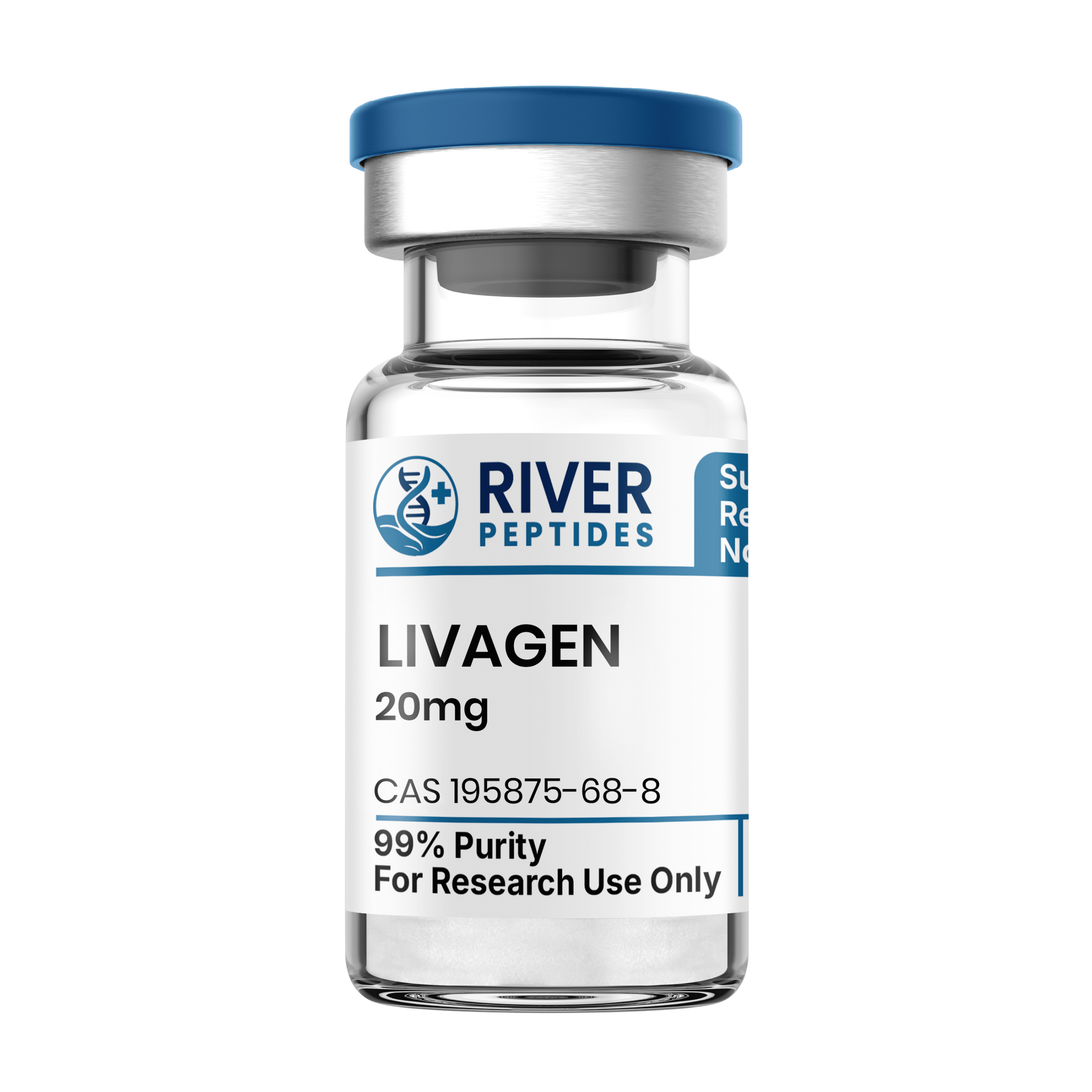
Livergen (20mg) — Research Compound
Livergen (also known as Livagen) is a short four-amino-acid peptide bioregulator created to support liver function at the cellular level. It acts directly on cellular DNA and gene regulation to help cells stay active and functional. In research environments, Livergen is investigated for its ability to reactivate aging genes, boost vital protein production, and protect liver cells from stress.
Findings from early-stage research have reported:
- Reactivation of dormant or silenced genes observed in aging cell samples
- Increased rates of essential protein synthesis measured in liver cell cultures
- Greater cellular resilience against toxins and oxidative stress in laboratory models
- Restoration of balanced cellular metabolism in compromised liver tissue
Researchers study Livergen to explore how short peptides can help regulate gene activity and maintain healthy organ tissue over time. Its focused action on liver cells makes it a key compound for researching tissue repair, metabolic health, and the biological processes of cellular aging.
Available Formats:
This compound is available as a vial of lyophilised powder, or can be ordered in a disposable pen, a reusable pen, or a cartridge for an existing reusable pen system.
Used solely for in vitro experiments and cannot be:
- Used in clinical trials involving humans
- Administered to humans as part of an experiment or investigation
- Supplied to another party for human investigational use
References
Functional morphology of an organotypic liver culture exposed to the tetrapeptide Livagen
This study directly investigated Livagen in organotypic liver culture. Immunocytochemical and morphometric analysis indicated that the tetrapeptide influenced structural and functional homeostasis in liver cell populations, making it highly relevant to liver-specific cellular research. Available here
Rhythm of protein synthesis in cultures of hepatocytes from rats of different ages
Researchers examined Lyvagen (Lys-Glu-Asp-Ala) in cultured hepatocytes from animals of different ages. The study reported increased protein synthesis following peptide exposure, with the strongest response observed in hepatocytes from older animals. This directly supports the product’s protein-synthesis and ageing-cell research context. Available here
Effect of peptide Livagen on activity of digestive enzymes in rats of different ages
This experimental study specifically evaluated Livagen (Lys-Glu-Asp-Ala) and its biological stability and enzyme-related activity. Researchers found that Livagen was weakly hydrolysed and produced age-dependent changes in digestive enzyme activity, providing additional evidence of the peptide’s biological activity in experimental models. Available here