Blog
How to Store TB-500 Correctly: Complete Research Storage Guide

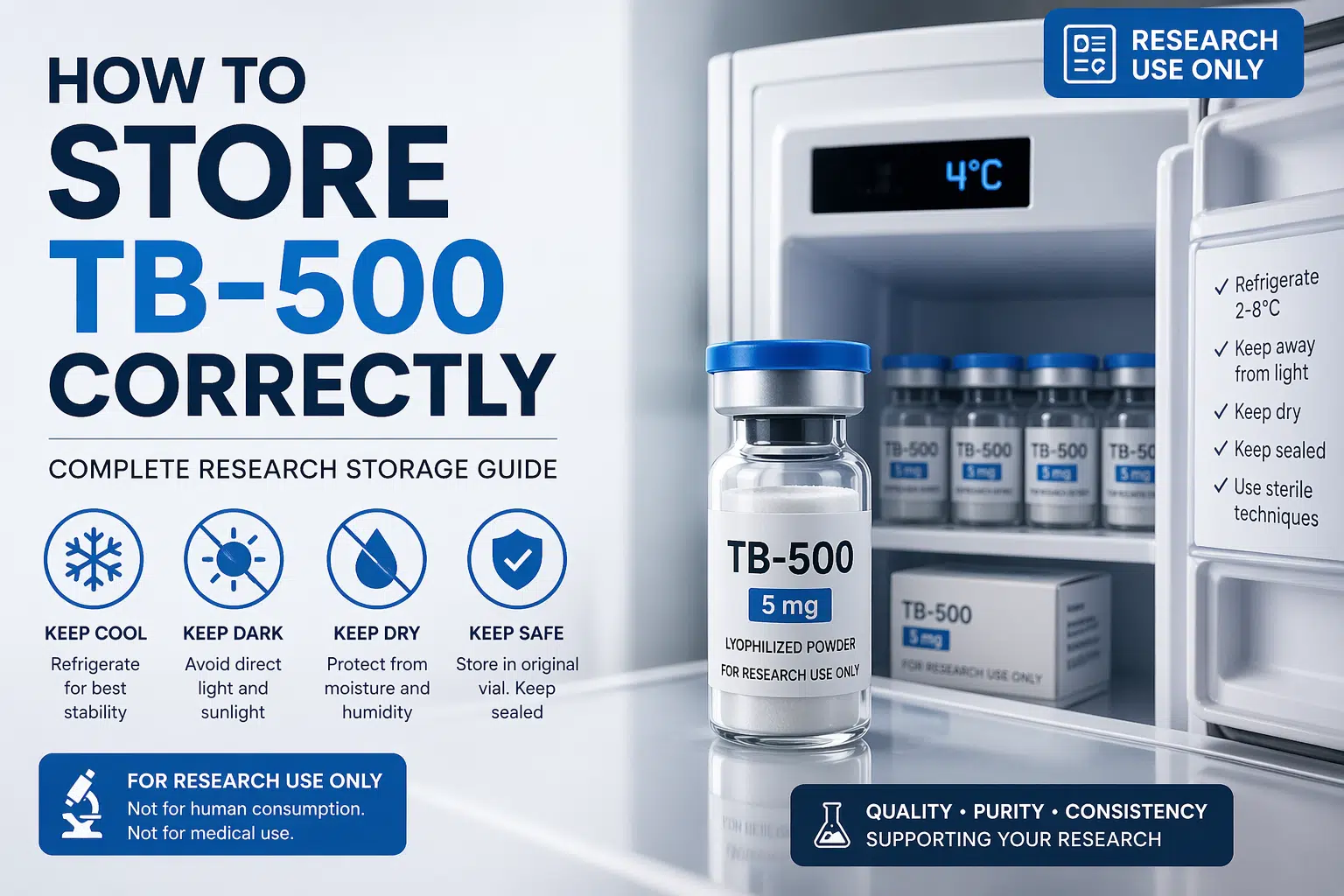
TB-500 should be stored in a cool, dry, and stable environment to help maintain product integrity for research purposes. Unmixed TB-500 is commonly kept refrigerated, while reconstituted TB-500 is typically stored in a refrigerator and handled carefully to reduce exposure to heat, moisture, and contamination.
If you are searching for how to store TB-500 correctly, proper storage is one of the most important factors in preserving peptide quality. Because research peptides can be sensitive to environmental conditions, correct handling can make a meaningful difference in stability over time.
What Is TB-500?
TB-500 is a synthetic peptide commonly used in laboratory and scientific research settings. It is usually supplied as a lyophilized powder, which means it has been freeze-dried to improve stability during transport and storage. This powdered form generally lasts longer than a liquid version when stored properly.
How to Store Unmixed TB-500 Powder
When TB-500 is still in powder form, it should be kept in a cool place away from heat, sunlight, and humidity. Many researchers prefer refrigeration because lower temperatures can help preserve stability. The vial should remain sealed until needed, and it is best stored in its original container.
Moisture is one of the biggest concerns with peptide powders. If humidity enters the vial, it may affect product condition. For that reason, keeping the cap secure and minimizing unnecessary opening is recommended.
How to Store Reconstituted TB-500
Once TB-500 has been mixed with a research solution, it becomes more sensitive than the dry powder version. Reconstituted TB-500 is commonly refrigerated and handled with extra care. The vial should be resealed after each use and returned to a stable cool temperature as soon as possible.
Researchers also try to avoid contamination by using sterile tools and keeping the vial opening clean. Gentle handling is preferred, as excessive shaking may not be ideal for delicate compounds.
Should TB-500 Be Frozen?
Some researchers choose freezing for longer-term storage, but repeated freeze-thaw cycles are usually avoided. Frequent temperature swings may reduce consistency over time. If freezing is necessary, smaller portions are sometimes prepared so only the amount needed must be thawed.
For short-term use, refrigeration is often the simpler and more practical option.
Common Storage Mistakes to Avoid
One of the most common mistakes is leaving TB-500 in a warm room or vehicle for extended periods. Heat exposure may shorten stability. Another issue is placing the vial in direct sunlight, such as on a windowsill or desk.
Repeatedly taking the vial out of refrigeration for long periods can also create unnecessary temperature fluctuations. Careless handling, moisture exposure, or using unclean tools may create avoidable problems.
How Long Does TB-500 Last?
Shelf life depends on several factors, including manufacturing quality, purity, packaging standards, and storage conditions. Powdered TB-500 often remains more stable than liquid forms, but exact timelines vary by supplier.
The best source of information is always the label or guidance provided by the manufacturer. Reputable suppliers typically include handling recommendations.
How to Tell If Storage Conditions Were Poor
Researchers may inspect a product if they suspect improper storage. Signs can include damaged packaging, broken seals, discoloration, unexpected moisture inside the vial, or unusual particles after mixing.
If product integrity is uncertain, many researchers choose not to proceed with use.
Why Supplier Quality Matters
Correct storage starts before the product reaches you. A reputable supplier should use secure packaging, clear labels, careful shipping methods, and transparent quality standards. Fast delivery and proper handling during transit can be just as important as storage after arrival.
Frequently Asked Questions
Does TB-500 need refrigeration?
Refrigeration is commonly preferred, especially after reconstitution, because cooler temperatures may help maintain stability.
Can TB-500 stay at room temperature?
Short exposure may happen during handling or shipping, but prolonged room temperature storage is generally avoided.
Is powdered TB-500 better for storage than liquid?
The lyophilized powder form is generally considered more stable than a reconstituted liquid version.
Can sunlight damage TB-500?
Direct light exposure is typically avoided, as many research compounds are stored best in darker conditions.
What container should TB-500 stay in?
The original sealed vial from the supplier is usually the best option unless specific lab procedures require otherwise.
Final Thoughts
Knowing how to store TB-500 correctly can help support better research consistency and product preservation. In most cases, the best approach is to keep powder cool and dry, refrigerate after reconstitution, and protect the product from heat, moisture, and unnecessary handling.
For research use only. Not for human consumption or medical use.