Blog
Storage and Handling Guidelines for BPC-157 in Research

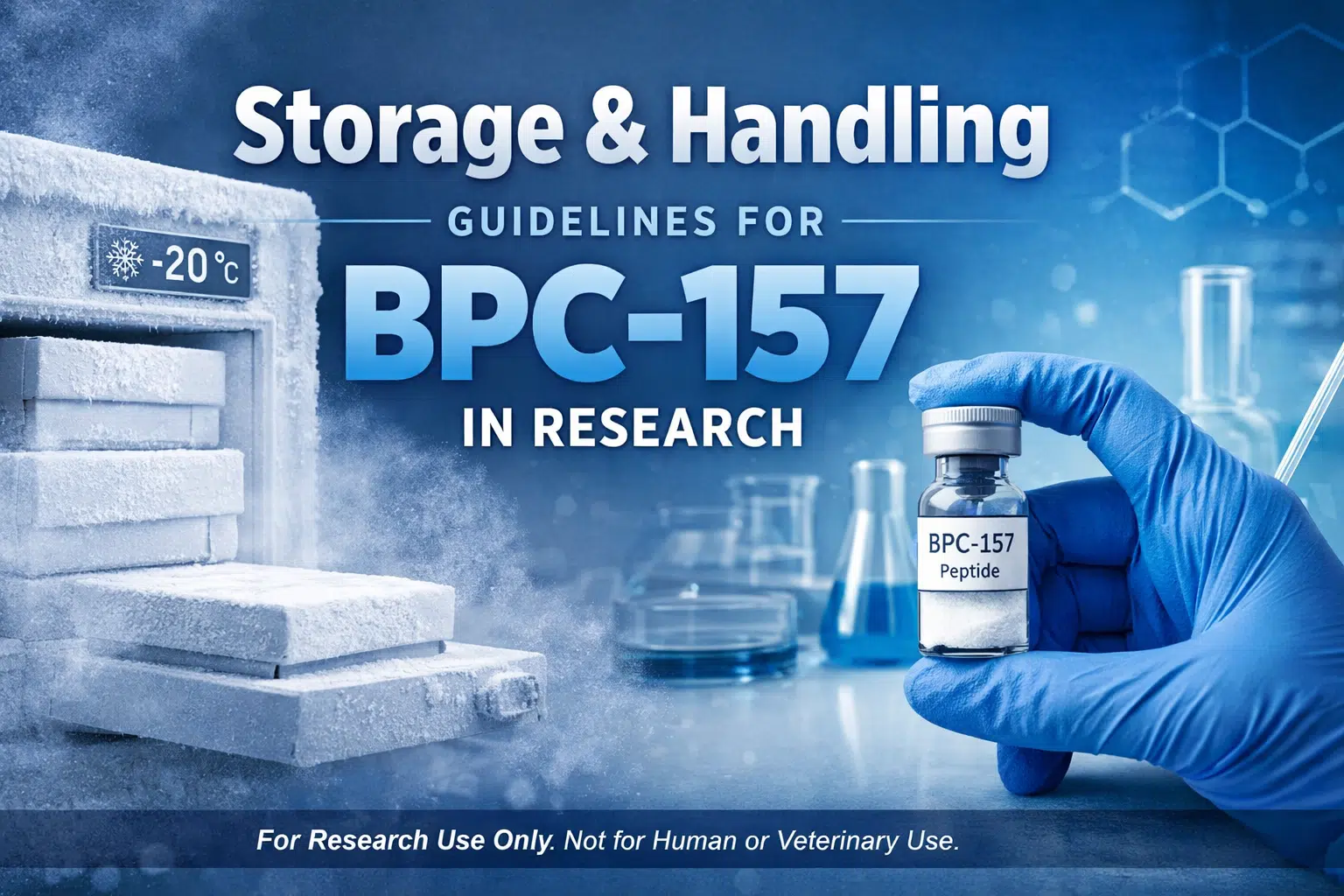
BPC-157 is a synthetic peptide widely studied in laboratory environments due to its structural stability and relevance in experimental models. As with any research compound, proper storage and handling are essential to maintain peptide integrity, prevent degradation, and ensure reliable experimental outcomes. This guide provides a clear, research-focused overview of how BPC-157 should be stored and handled under laboratory conditions.
This content is for educational and research purposes only. BPC-157 is not approved for human or veterinary use.
What Is BPC-157 in a Research Context?
BPC-157 is a synthetic peptide derived from a sequence found in body protection compounds. In research settings, it is typically supplied as a lyophilized (freeze-dried) powder. This form enhances stability during transportation and long-term storage, allowing researchers to preserve the compound until it is reconstituted for experimental use.
Because peptides are sensitive to environmental conditions such as temperature, light, and moisture, improper handling can result in degradation or loss of structural integrity. This is why standardized storage protocols are critical in laboratory environments.Why Proper Storage Matters in Peptide Research
Peptides like BPC-157 are composed of amino acid chains held together by peptide bonds. These bonds can be affected by heat, oxidation, and enzymatic activity. If the peptide degrades, it may no longer maintain its intended structure, which can compromise the validity of experimental results.
Maintaining proper storage conditions helps ensure that the peptide remains stable, retains its purity, and performs consistently across different research applications. It also minimizes variability, which is essential for reproducibility in scientific studies.
Recommended Storage Conditions for BPC-157
BPC-157 should be stored according to whether it is in its lyophilized form or has already been reconstituted.
In its lyophilized state, BPC-157 is relatively stable when kept in a cool, dry environment. For short-term storage, it can be kept in a refrigerator at temperatures between 2°C and 8°C. For long-term storage, it is generally recommended to keep the peptide in a freezer at temperatures around -20°C or lower. This helps preserve its structural integrity for extended periods.
It is important to ensure that the peptide is stored in airtight, sealed containers to prevent exposure to moisture. Lyophilized peptides can absorb water from the environment, which may initiate degradation processes even before reconstitution.
Once reconstituted, BPC-157 becomes significantly more sensitive to environmental conditions. In solution form, it should be stored in a refrigerator and used within a limited timeframe, typically determined by laboratory protocols. Freezing and thawing cycles should be minimized, as repeated temperature fluctuations can destabilize the peptide.
Light and Environmental Exposure
Exposure to light, particularly ultraviolet (UV) light, can contribute to peptide degradation. For this reason, BPC-157 should be stored in dark conditions or in containers that limit light exposure, such as amber vials.
Humidity is another critical factor. Moisture can affect both lyophilized and reconstituted peptides, potentially leading to hydrolysis or contamination. Laboratories should maintain controlled humidity levels and ensure that storage containers are properly sealed.
Air exposure can also introduce oxidative stress, especially if the peptide is repeatedly opened and handled. Limiting the frequency of exposure and using proper sealing techniques can help mitigate this risk.
Reconstitution Considerations in Research Settings
Reconstitution refers to the process of dissolving lyophilized BPC-157 into a suitable solvent for experimental use. This step must be carried out with precision to maintain peptide integrity.
The solvent used should be appropriate for laboratory research and free from contaminants. The process should be performed in a controlled environment, ideally using sterile techniques to avoid introducing impurities. Gentle handling during reconstitution is important, as excessive agitation can affect peptide stability.
After reconstitution, the peptide should be clearly labeled with the date and concentration. This helps ensure accurate tracking and prevents the use of degraded solutions in experiments.
Avoiding Contamination in Laboratory Handling
Contamination is one of the most common risks in peptide research. Even minor contamination can affect experimental outcomes and compromise data integrity.
To reduce this risk, researchers should use sterile equipment and maintain clean working environments. Gloves, lab coats, and proper handling tools should be used at all times. Direct contact with the peptide should be avoided, and exposure to open air should be minimized.
It is also important to avoid repeated opening of storage containers. Each exposure increases the likelihood of introducing contaminants or moisture. Where possible, aliquoting the peptide into smaller portions can help reduce repeated handling.
Stability and Shelf Life of BPC-157
The stability of BPC-157 depends on several factors, including storage temperature, exposure to light, and whether the peptide is in lyophilized or reconstituted form.
In lyophilized form and stored under optimal conditions, BPC-157 can remain stable for extended periods. However, once reconstituted, the stability window becomes shorter. Researchers should follow established laboratory guidelines to determine appropriate usage timelines.
Monitoring for changes in appearance, such as discoloration or precipitation, can provide early indications of degradation. If any changes are observed, the peptide should not be used in research applications.
The Role of Proper Labeling and Documentation
Accurate labeling is a fundamental part of peptide handling. Each vial should include information such as the compound name, batch number, storage conditions, and date of reconstitution if applicable.
Proper documentation supports traceability and ensures that research data can be validated. It also helps maintain consistency across experiments, particularly in collaborative or long-term studies.
Quality Assurance and Storage Best Practices
Maintaining peptide quality is not only about storage temperature but also about consistency in handling procedures. Laboratories should establish standard operating procedures for peptide storage and ensure that all personnel are trained accordingly.
Using validated storage equipment, such as calibrated refrigerators and freezers, helps maintain consistent conditions. Regular monitoring of temperature and humidity can further reduce the risk of degradation.
Additionally, sourcing peptides from suppliers that provide third-party testing and certificates of analysis can enhance confidence in the compound’s purity and stability before it even enters the laboratory.
Frequently Asked Questions
How should BPC-157 be stored before reconstitution?
BPC-157 should be stored in a cool, dry environment. Refrigeration is suitable for short-term storage, while freezing is recommended for long-term preservation.
What happens if BPC-157 is exposed to room temperature for extended periods?
Prolonged exposure to higher temperatures may accelerate degradation, potentially affecting the peptide’s structure and stability.
Can reconstituted BPC-157 be frozen?
While freezing may be possible in some research protocols, repeated freeze-thaw cycles should be avoided as they can compromise peptide integrity.
Why is moisture a concern for lyophilized peptides?
Moisture can initiate chemical reactions that lead to peptide degradation, even before reconstitution occurs.